Lessons Learned
Her Investment Journey
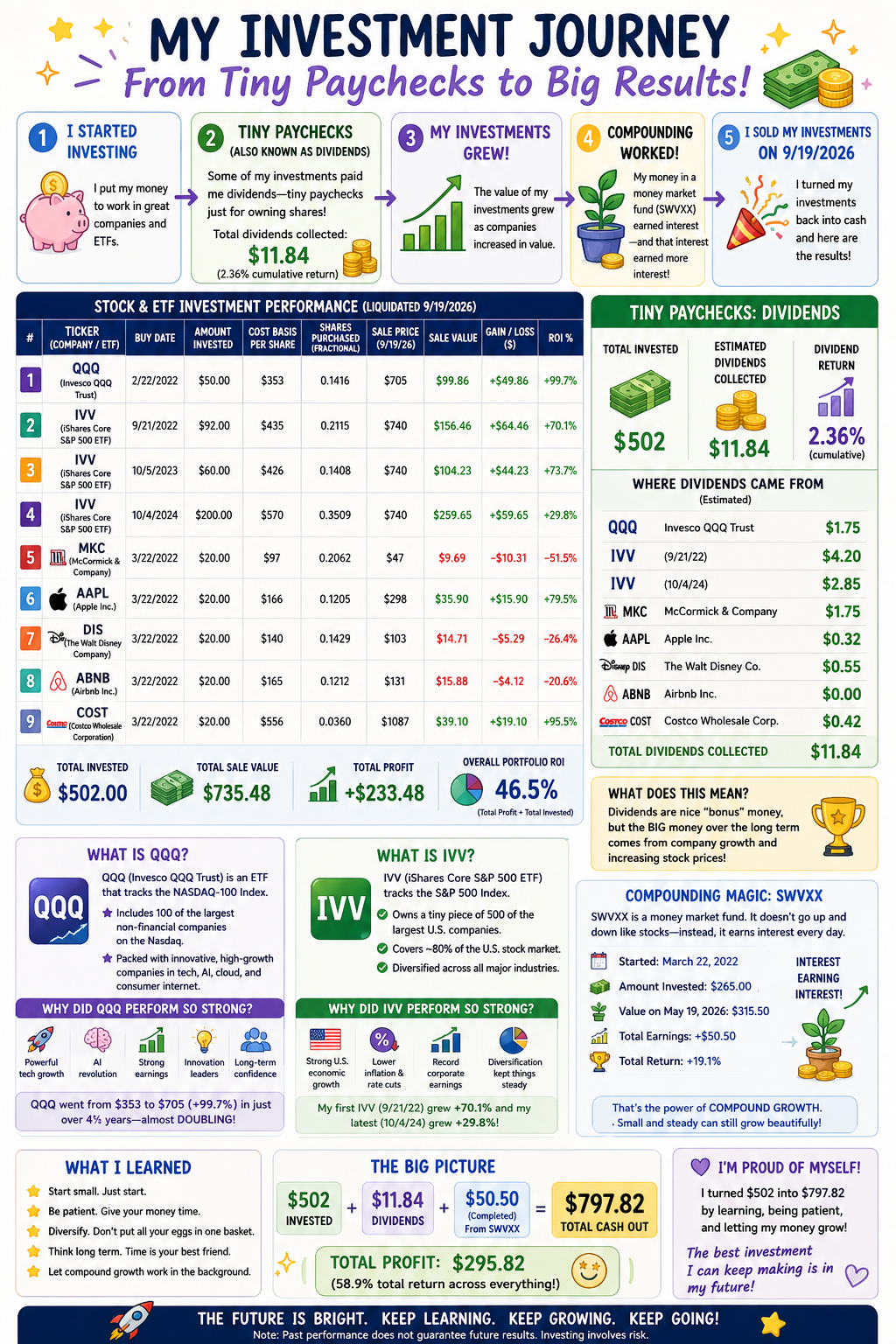
The full story — from investing, to dividends, to compounding, to cashing out.
Teaches · Big-picture portfolio results
Rizzology.art / Money Rizz / Case Study
A real-world case study in saving, investing, and patience.
This real-world case study follows one young investor's early experience with saving, stocks, ETFs, dividends, cash, risk, and time. The goal was never to pick perfect winners. The goal was to learn how money moves, how risk feels, and why time matters.
Section
· 01Total Invested
$502.00
Total Final Value
$797.82
Total Profit
+$295.82
Annual Growth Rate
10.8%
Stock Sale Value
$735.48
Dividends Earned
$11.84
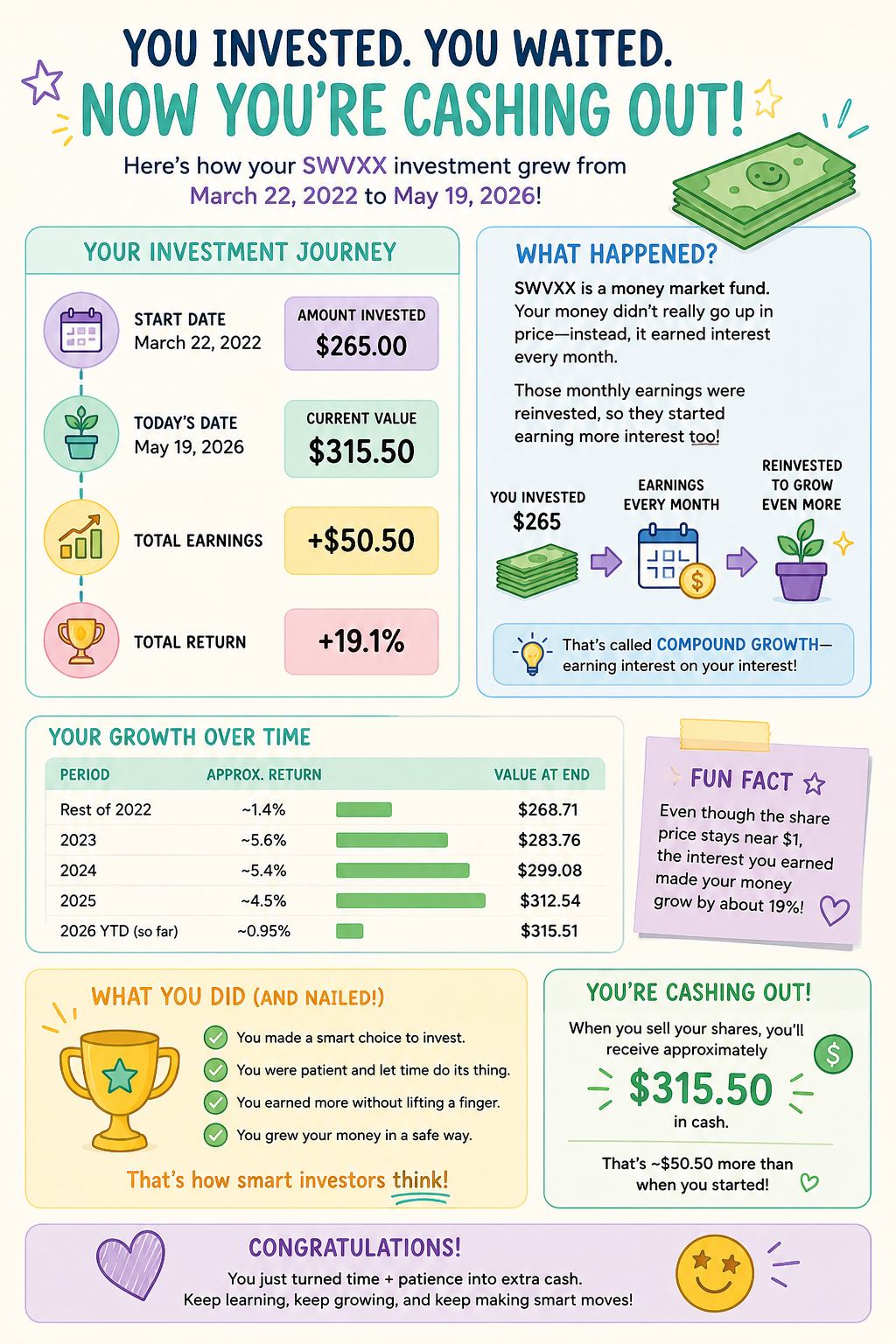
SWVXX Earnings
+$50.50
That means the money grew by learning, patience, ownership, and time.
This is a learning example, not investment advice.
Section
· 02Small dollars of real money were used to begin learning.
When you buy a stock or ETF, you own a tiny piece.
Some investments paid dividends.
Certain companies and funds performed very well.
Not every investment wins.
Growth built on previous growth.
Learning may become more valuable than the dollars.
Section
· 03The Numbers
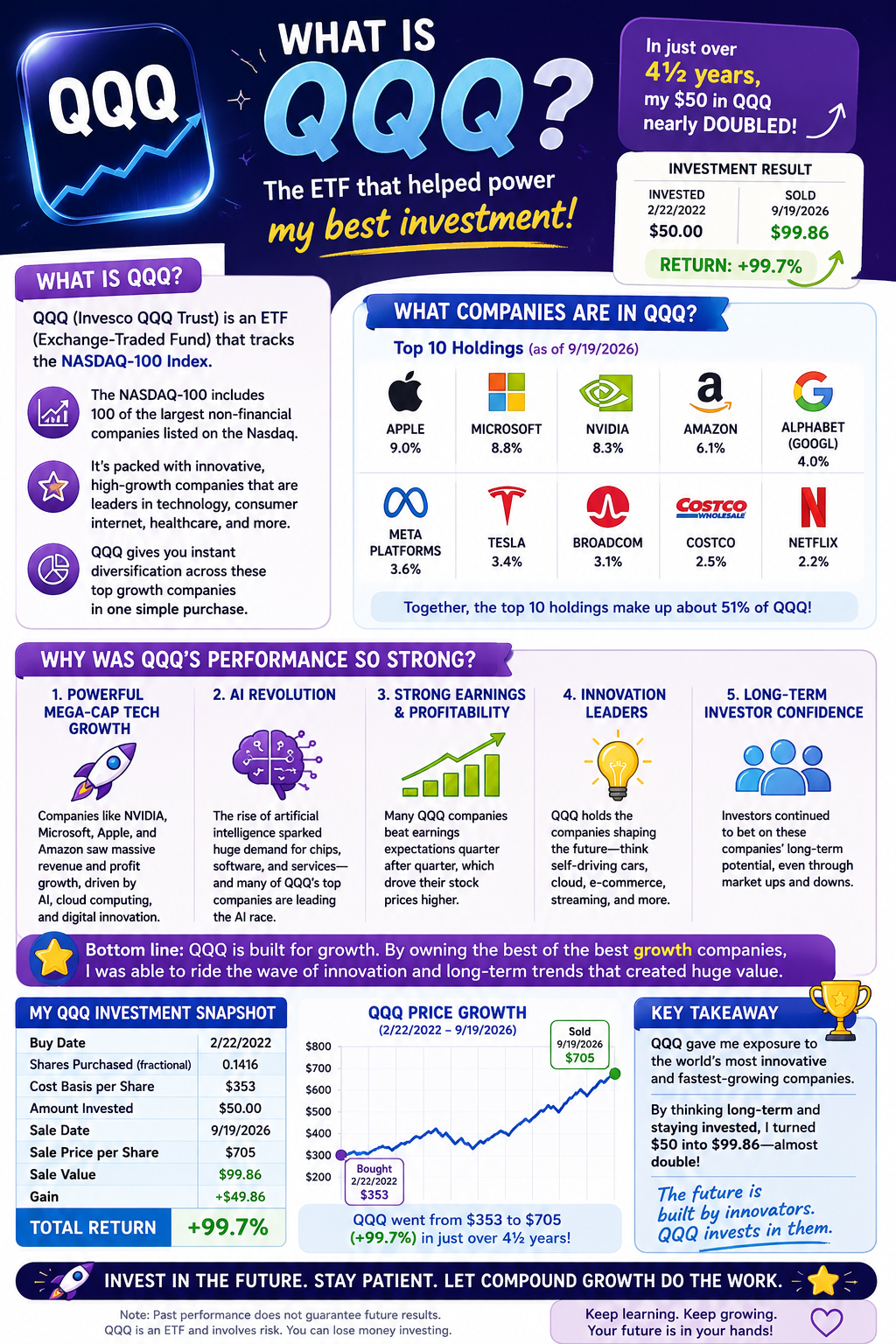
What It Is
QQQ is an ETF that holds many large innovative technology companies.
Why It Moved
AI growth, strong technology performance, and large company earnings growth lifted prices.
Lesson Learned
Owning many innovative companies can create strong growth — and bigger swings.
Section
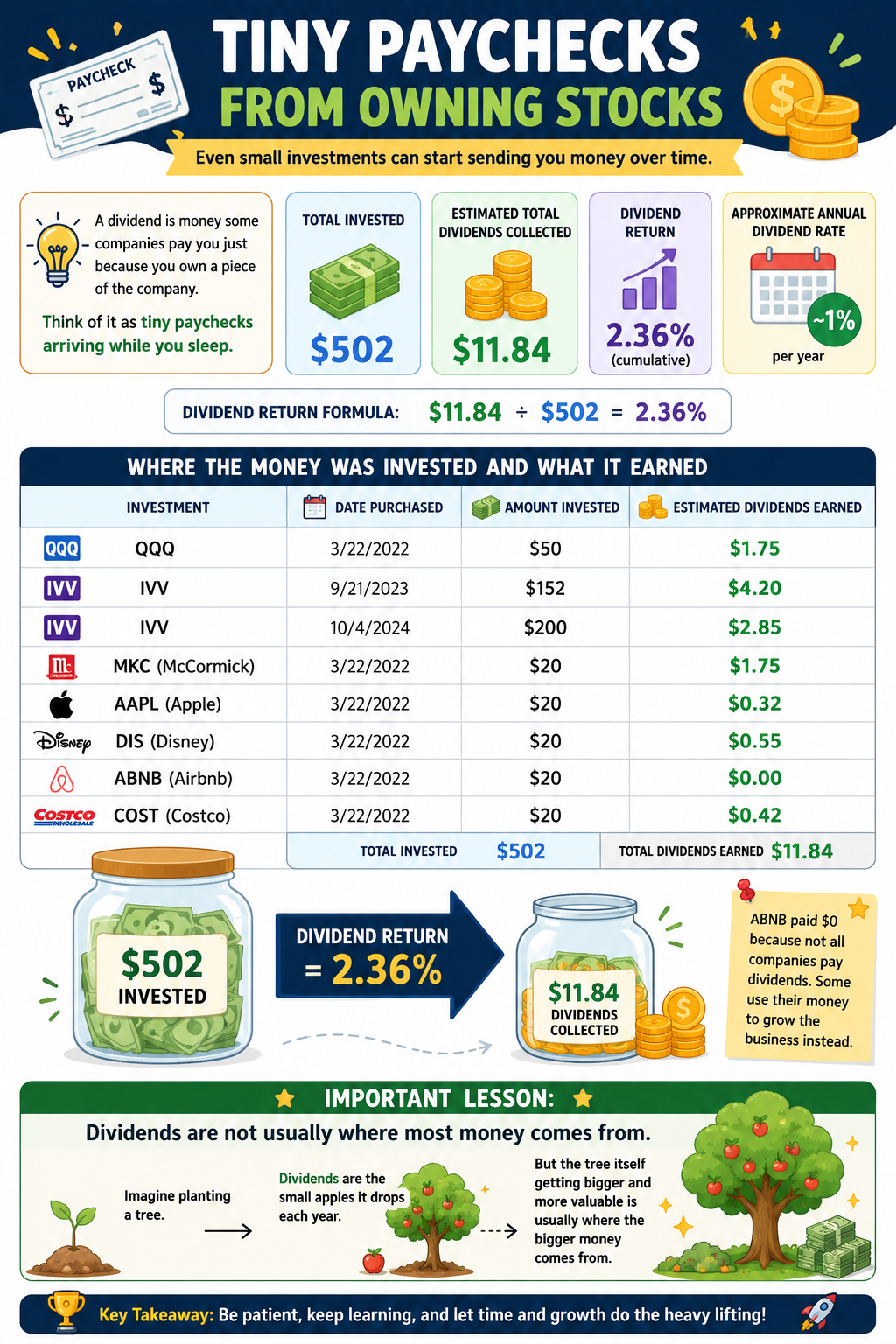
· 04A dividend is money some companies pay you because you own a piece of the company. It is like a tiny paycheck for being an owner.
Total
$11.84
Return
2.36%
~ Yearly
~1%
Section
· 05Risk does not always mean bad. It means the value can move up or down more. Higher-risk investments can grow faster, but they can also fall harder.
Risk Level
Moderate
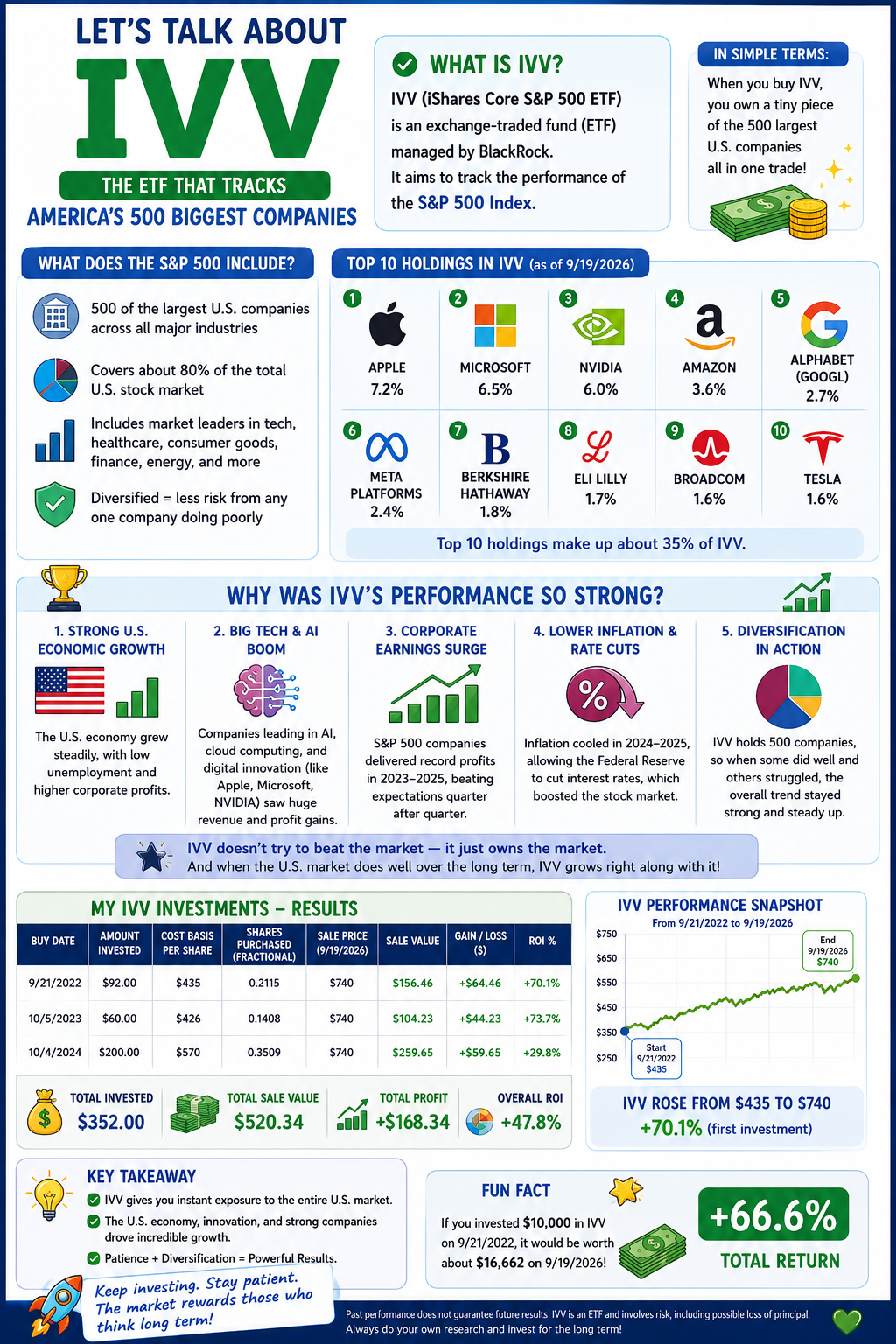
Examples: IVV
Section
· 06QQQ
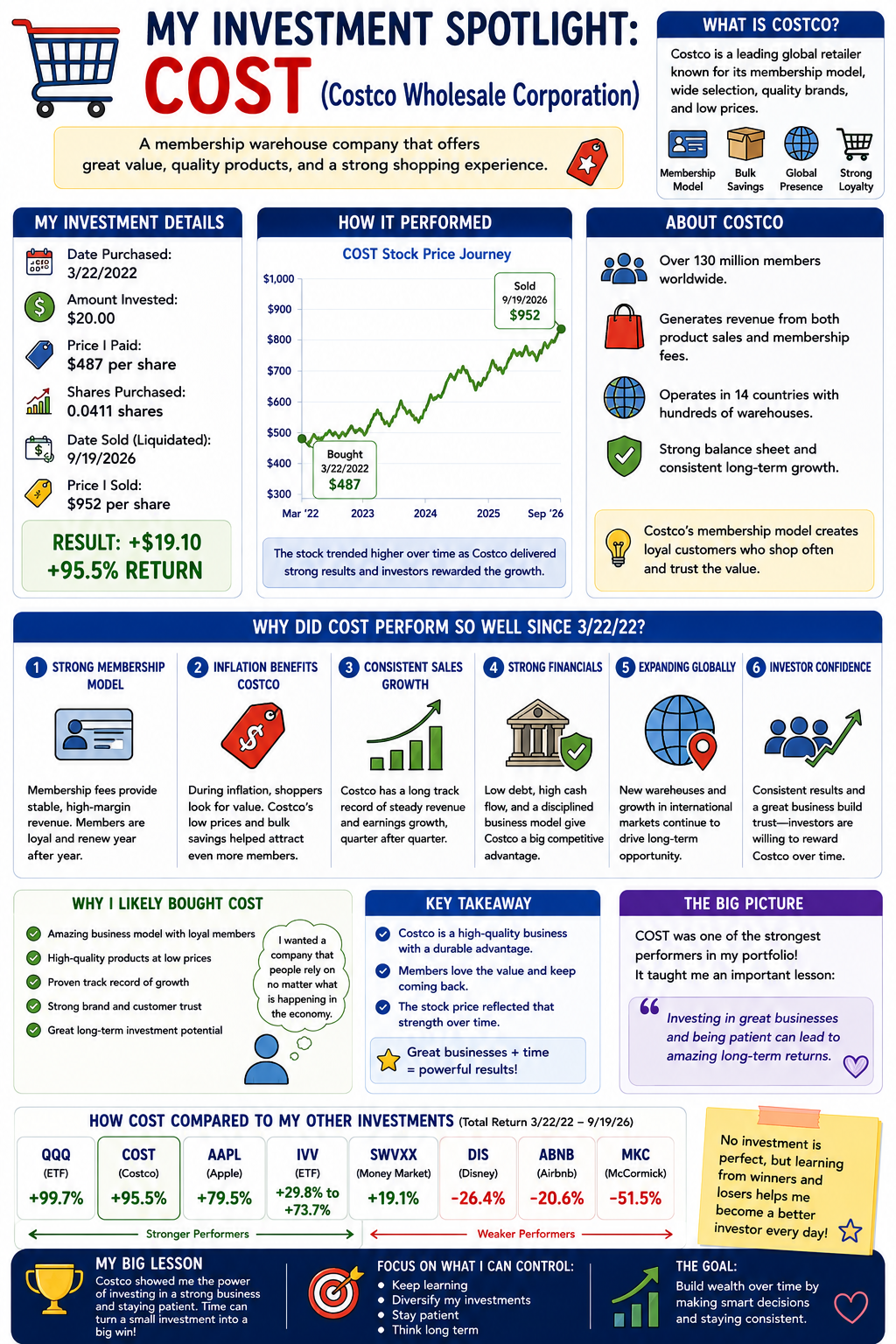
COST
MKC
SWVXX
IVV
Section
· 07What is an ETF?
Section
· 08Printable learning posters from this investment case study.
These posters turn real investment results into simple visual lessons about growth, risk, dividends, compounding, and patience.
Want the poster version? These are printable visual summaries of the lessons.
The full story — from investing, to dividends, to compounding, to cashing out.
Teaches · Big-picture portfolio results
How dividends work and how small payments can add up over time.
Teaches · Dividends
How a money market fund can grow through interest and compounding.
Teaches · Compounding and lower-risk growth
How QQQ gave exposure to innovative tech companies and why it performed strongly.
Teaches · ETFs, technology growth, risk and reward
How IVV tracks the S&P 500 and gives broad exposure to large U.S. companies.
Teaches · Index investing and diversification
Why Costco performed strongly and what the investment taught.
Teaches · Business quality, loyal customers, long-term growth
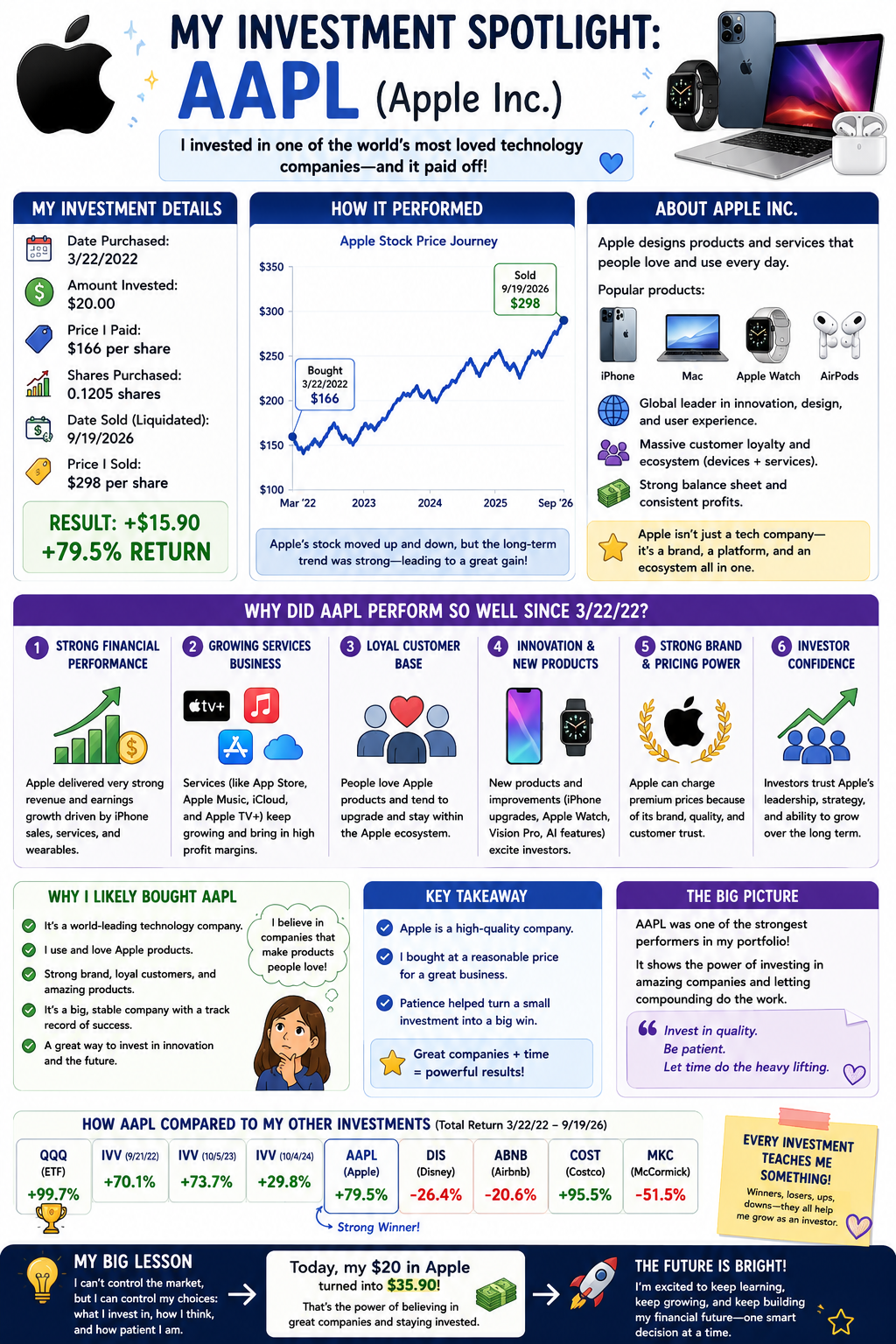
How Apple's brand, ecosystem, and innovation helped drive performance.
Teaches · Brand strength and innovation
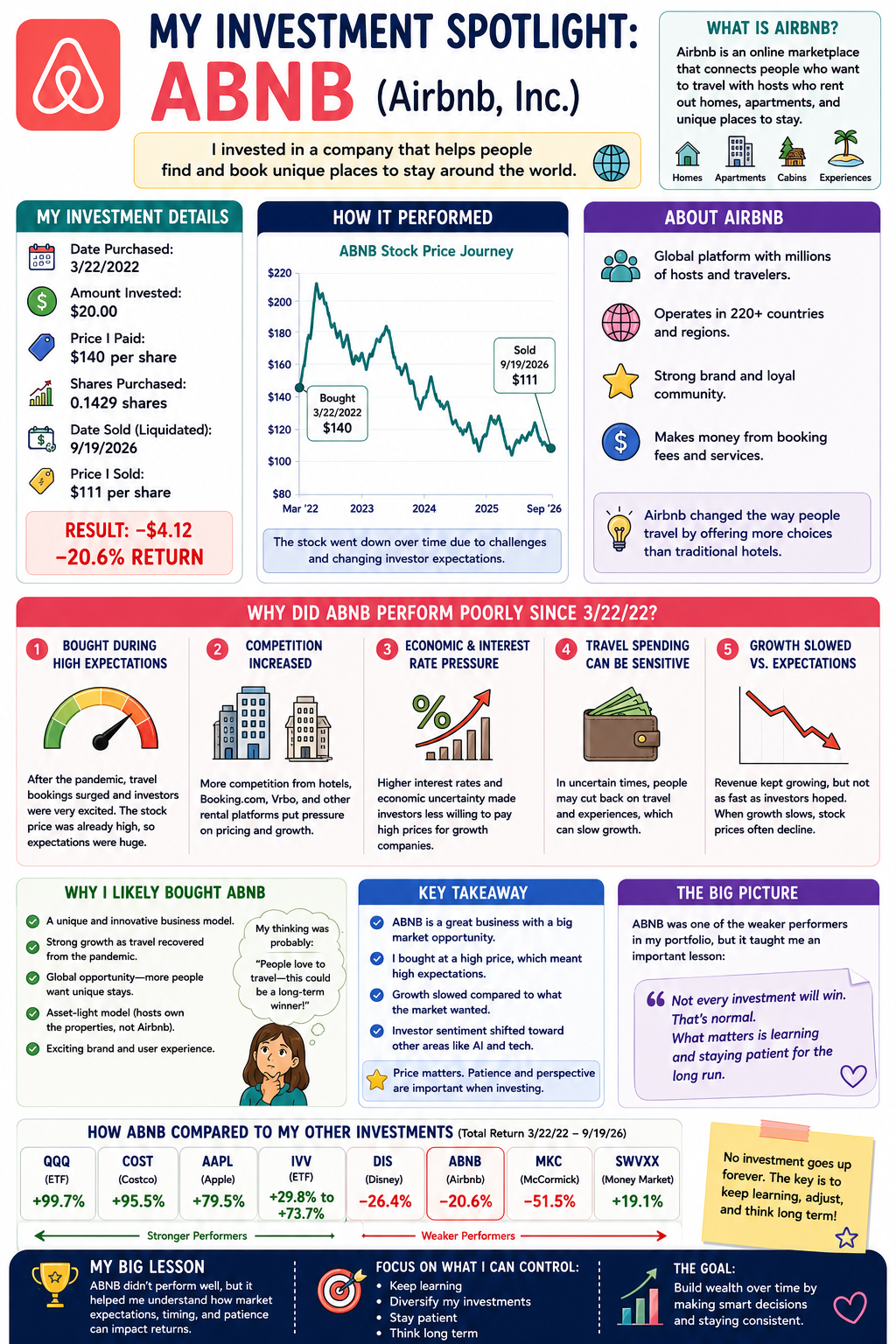
Why Airbnb was an exciting growth company but underperformed during this period.
Teaches · Growth expectations and volatility
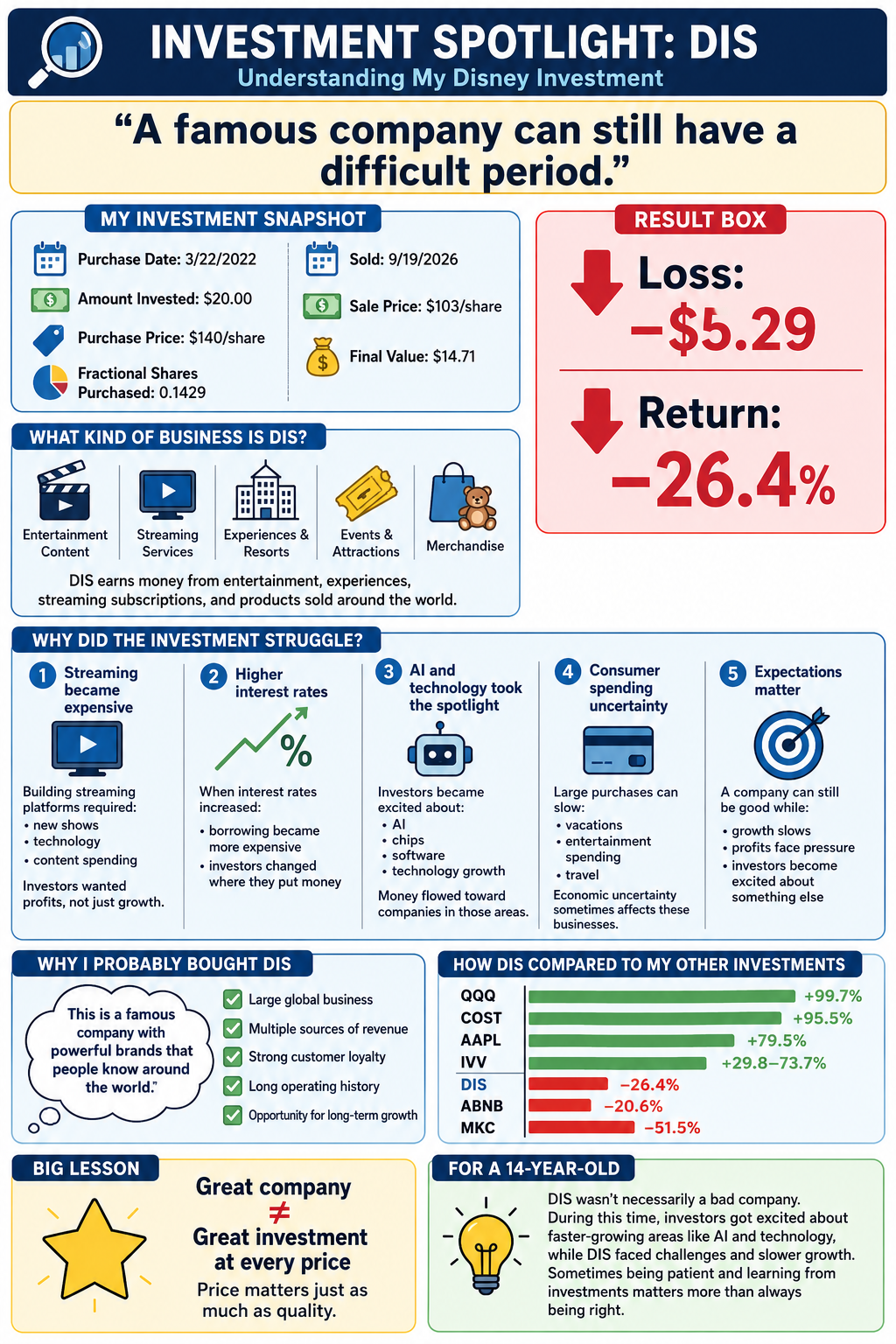
How a famous company can still have a difficult investment period.
Teaches · Expectations, business challenges, and price matters
Section
· 10How uncertainty shows up in real prices — not just in theory.
Why upside is the payoff for sitting with discomfort.
How years quietly do most of the heavy lifting.
Small, recurring payments from owning a piece of a business.
What money does when it sits still vs. when it goes to work.
Why spreading bets softens the blow when one idea fails.
Holding through drawdowns is a learned, practiced skill.
Judging choices against alternatives, not against perfection.
Section
· 11Investing is not about guessing perfectly. It is about learning how choices behave over time.
Section
· 09Start small
Even small investments can teach big lessons.
Be patient
Time gave the investments a chance to grow.
Diversify
Not every investment moved the same way.
Risk matters
More risk can mean more upside and more downside.
Compounding works
Growth can build on itself.
Some investments win
QQQ, COST, AAPL, and IVV performed strongly.
Some investments lose
MKC, DIS, and ABNB showed that investing includes mistakes and hard lessons.
Learning is the real return
Understanding what happened may be more valuable than the dollars.
“The best investment a young learner can keep making is in their own future.”
Methodology & Disclaimer
These examples are based on a real beginner investment journey and are used for educational purposes only. Numbers may be rounded for clarity. Rizzology does not provide financial, investment, legal, or tax advice, and past performance does not guarantee future results.
Read the full disclaimer & methodologyFive short paths through Rizzology — pick the one that fits where you are.